

Africa has a way of defying every expectation you arrive with. If you have spent any time reading headlines rather than travel accounts, you might picture a continent defined by its challenges. But spend even a few days on the ground and that version of Africa dissolves completely, replaced by something far more vivid: the warmth of people who greet strangers like old friends, landscapes that shift from snowcapped peaks to ocean-floor coral reefs within a single country, wildlife encounters that rewire your sense of what is possible in the natural world, and cities with a cultural energy that rivals anywhere on earth.
The harder question is not whether Africa is worth visiting. It is where to start. With 54 countries covering an area larger than Europe, China, the United States, and India combined, the choice can feel overwhelming. This guide cuts through the noise with an honest, experience-based look at 15 of the best African countries to visit in 2026, what makes each one special, and what you should not miss when you get there. Whether you are planning your first African safari tours or returning to explore somewhere new, this is where to look first.
1. Kenya
Kenya belongs near the top of any serious Africa travel list. It combines the continent’s most iconic safari destinations with a coastline that could hold its own against any beach destination in the world, a capital city with genuine personality, and a cultural richness that rewards travelers who look beyond the game parks. The people are warm, the infrastructure for tourism is well developed, and the wildlife experiences are among the most consistently rewarding on the continent.
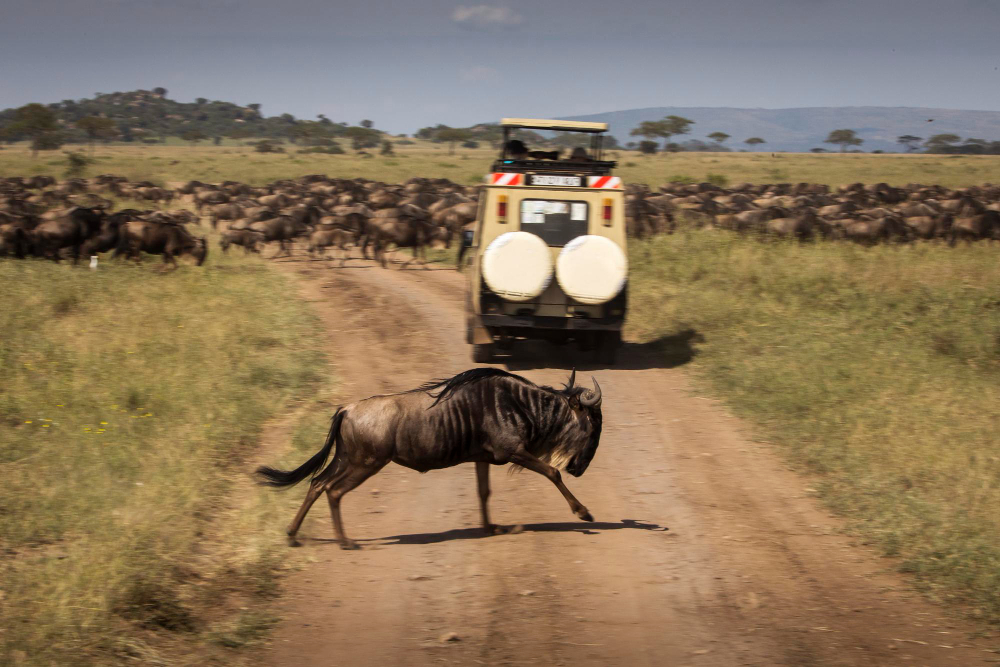
The Masai Mara is Kenya’s crown jewel: open grasslands teeming with lions, leopards, cheetahs, elephants, and buffalo, with the added spectacle of the Great Migration between July and October when over a million wildebeest cross from Tanzania in river crossing scenes of extraordinary drama. Amboseli offers something different, the chance to watch large elephant herds move through marshland with the full mass of Kilimanjaro rising behind them, one of the great visual compositions in African wildlife photography.
Kenya’s coast adds a completely different dimension. Diani Beach, Watamu, Lamu, Kilifi, and Malindi offer white sand, warm Indian Ocean water, Swahili cuisine, and a cultural depth rooted in centuries of Arab, Portuguese, and African influence. Nairobi itself is worth at least a day, with the Giraffe Centre, the David Sheldrick Elephant Orphanage, and the Nairobi National Park all within the city limits. For expertly guided Kenya safari tours that cover the full range of what this extraordinary country offers, working with a specialist operator makes every difference.
Highlights: Masai Mara, Amboseli, Tsavo, Samburu, Diani Beach, Lamu, Nairobi National Park, Maasai cultural visits.
2. Tanzania
Tanzania is Kenya’s southern neighbor and its equal in almost every category of wildlife experience, with the added dimensions of Africa’s highest mountain, the world’s largest intact volcanic caldera, and one of the Indian Ocean’s most historically layered islands. It is a country that takes weeks to do justice to and rewards every day you give it.
The Serengeti covers nearly 15,000 square kilometers of open savannah and supports the full year-round cycle of the Great Migration, from the dramatic calving season on the southern plains between January and March to the river crossings on the northern boundary in the middle of the year. The Ngorongoro Crater, a collapsed volcanic caldera 260 kilometers square, is one of the densest wildlife areas on earth and home to a significant black rhino population rarely seen elsewhere in East Africa.
Zanzibar closes the Tanzania circuit with something no mainland safari can offer: Stone Town’s labyrinthine coral streets and spice market history, swimming with sea turtles in natural lagoons, and beaches on the east coast that rank among the finest in the Indian Ocean. Ruaha National Park in the south, home to around ten percent of the world’s lion population, rewards travelers willing to venture beyond the northern circuit with a genuine sense of wilderness and very few other vehicles.
Highlights: Serengeti, Ngorongoro, Zanzibar, Kilimanjaro, Ruaha, Mahale chimpanzee trekking, Tarangire, Arusha.
3. Uganda
Uganda is called the Pearl of Africa, and the name fits. It is a country of extraordinary biological richness: more primate species than almost anywhere else on earth, a landscape of equatorial forest, volcanic crater lakes, and savannah plains, and a River Nile that drops through some of the most dramatic white water in the world at Jinja. It is also one of Africa’s most underrated destinations, which means that visitors who make the effort to get here often find themselves in wilderness areas with very few other travelers around.
Gorilla trekking in Bwindi Impenetrable Forest is Uganda’s signature experience and one of the most profound wildlife encounters available anywhere on the continent. Spending an hour in the presence of a mountain gorilla family, close enough to hear them moving through the vegetation, is an experience that defies adequate description. Kibale Forest National Park offers chimpanzee trekking of equal quality, with habituation experiences available for travelers who want extended time with the primates.
Queen Elizabeth National Park adds tree-climbing lions in the Ishasha sector and boat cruises on the Kazinga Channel with hippos, crocodiles, and elephants along the banks. Murchison Falls, where the entire volume of the Nile forces itself through a seven-meter gap in the rock, is one of the most dramatic natural sights in Africa. For adventure travelers, the white water rafting at Jinja is world-class, with bungee jumping, kayaking, and jet boating available on the same stretch of river.
Highlights: Bwindi gorilla trekking, Kibale chimpanzees, Queen Elizabeth, Murchison Falls, Jinja rapids, Lake Bunyonyi, Rwenzori Mountains.
4. Rwanda
Rwanda’s transformation over the past thirty years is one of the most remarkable stories in modern African history, and the country that has emerged from it is one of the most organized, cleanest, and genuinely safe destinations on the continent. Kigali regularly ranks as Africa’s cleanest capital city, the governance is consistent and effective, and the tourism sector is managed with a level of professionalism that sets a standard for the rest of the continent.
The mountain gorillas of Volcanoes National Park are Rwanda’s primary draw and among the most extraordinary wildlife experiences in the world. Daily permits are strictly limited, keeping encounters intimate and protecting the gorillas from the stress of over-visitation. The result is an experience that feels genuinely rare and deeply personal. Rwanda also offers chimpanzee trekking in Nyungwe Forest, big five game drives in the recovering Akagera National Park, and the cultural and historical depth of Kigali’s Genocide Memorial and the surrounding city.
Lake Kivu, on the country’s western edge bordering the DRC, is one of Africa’s most beautiful lakes and an increasingly popular destination for travelers wanting to extend their Rwanda itinerary with some lakeside relaxation and excellent coffee, which the country produces in abundance.
Highlights: Volcanoes National Park gorilla trekking, Nyungwe Forest, Akagera National Park, Kigali city, Lake Kivu.
5. Seychelles
The Seychelles is 115 islands scattered across the western Indian Ocean, and it represents island travel at its most extraordinary. The granite boulders that frame the beaches of La Digue and Praslin are found nowhere else on earth, the result of an ancient continental shelf that was left behind when the supercontinents separated, creating an island geology completely unlike the volcanic formations of most other Indian Ocean destinations.
The beaches here, particularly Anse Lazio on Praslin and Anse Source d’Argent on La Digue, consistently rank among the most beautiful in the world. The marine environment is equally exceptional: the waters around the islands support whale sharks, manta rays, hawksbill turtles, and a coral ecosystem visible through some of the clearest water in any ocean. Snorkeling and diving in the marine national parks at Sainte Anne, Curieuse, and Baie Ternay offer some of the best underwater experiences in the Indian Ocean.
Curieuse Island is home to a significant population of giant Aldabra tortoises, which wander freely around the island’s beaches and mangroves. The Vallee de Mai on Praslin, a UNESCO World Heritage Site, is the only place on earth where the Coco de Mer palm grows in its natural forest habitat, producing the largest seed of any plant in the world. Victoria, the compact capital on Mahe, offers a good introduction to the islands’ distinctive Creole culture before heading out to the quieter outer islands.
Highlights: Anse Lazio, Anse Source d’Argent, Vallee de Mai, Aldabra tortoises, marine park snorkeling and diving, Victoria.
6. Mauritius
Mauritius sits east of Madagascar in the Indian Ocean and has built one of the most sophisticated tourism industries in Africa over the past five decades. The combination of white sand beaches, calm lagoon water protected by a coral reef, and a genuinely diverse cultural identity, shaped by African, Indian, Chinese, and European influences over centuries of settlement, gives the island a character that is more layered and interesting than its beach resort reputation suggests.
The beaches on the west and north coasts, including Flic en Flac, Pereybere, and Belle Mare on the east, offer excellent conditions for swimming and water sports year-round. Morning boat excursions off the west coast regularly encounter spinner dolphins in the open water, a surprisingly accessible wildlife experience that requires nothing more than an early start. The Blue Bay Marine Park in the south is one of the best snorkeling and diving sites in the Indian Ocean, with a healthy coral garden and good visibility.
Beyond the beaches, the Black River Gorges National Park in the island’s interior protects the last remnants of native Mauritian forest and is home to endemic bird species found nowhere else. Hiking Le Morne Brabant, the dramatic basalt monolith on the southwest peninsula, offers panoramic views over the lagoon. The Bois Cheri tea plantation and the Chateau de Labourdonnais both provide insight into the island’s colonial and agricultural history, and Port Louis market is one of the most vivid and culturally authentic experiences available in the capital.
Highlights: Flic en Flac, Belle Mare, Blue Bay Marine Park, Black River Gorges, Le Morne, dolphin watching, Port Louis market.
7. Madagascar
Madagascar is unlike anywhere else on earth, and that is not a figure of speech. The island separated from the African mainland roughly 160 million years ago, and the species that evolved in isolation since then are found nowhere else on the planet. Around 90 percent of Madagascar’s wildlife is endemic, including all 100-plus species of lemur, the fossa, the world’s smallest primate, and plant families with no relatives on any other continent. For travelers interested in natural history and genuine ecological uniqueness, Madagascar belongs at the very top of the list.
The Avenue of the Baobabs near Morondava is one of Africa’s most photographed landscapes: ancient baobab trees, some over a thousand years old, lining a red dirt track with nothing else in the frame. Tsingy de Bemaraha National Park protects a UNESCO-listed landscape of razor-sharp limestone pinnacles carved by water erosion over millions of years, accessible only in the dry season and utterly unlike any other geological formation in Africa. The Kirindy Forest Reserve offers the best chance of seeing the fossa, Madagascar’s elusive top predator.
Nosy Be, the island off the northwest coast, is the base for boat excursions to swim with whale sharks and observe humpback whales between July and September. The Tsiribihina River descent by pirogue, camping on the riverbanks over three days, is one of Africa’s great slow travel experiences, passing tobacco plantations, lemur-filled forest, and local fishing villages entirely off the tourist circuit.
Highlights: Avenue of the Baobabs, Tsingy de Bemaraha, Kirindy Forest, Nosy Be, lemur encounters, Tsiribihina River descent.
8. South Africa
South Africa is one of those destinations that refuses to be summarized. It is the Kruger National Park and its surrounding private reserves, where Big Five sightings are among the most reliable on the continent and the lodge infrastructure is world class. It is Cape Town, one of the most dramatically situated and culturally layered cities anywhere in the world. It is the Winelands of Stellenbosch and Franschhoek, the Garden Route’s lagoons and coastal forests, the Drakensberg’s towering escarpment, and Hermanus where southern right whales breach within walking distance of the shore.
The Kruger alone justifies the trip for most first-time visitors. At nearly two million hectares, it is one of the largest national parks in Africa, and its self-drive infrastructure allows visitors without a guide to explore at their own pace, something almost impossible in East African parks. The adjacent private reserves of Sabi Sand and Timbavati offer exclusive game drives with off-road access and walking safaris that reach a level of intimacy unavailable in the national park.
Cape Town adds dimensions that no East African destination can match: Table Mountain rising behind one of the world’s great harbors, the Boulders Beach penguin colony at Cape Point, Robben Island where Nelson Mandela was imprisoned for 18 years, and a food and wine scene that draws visitors back on its own merits long after the wildlife memories have settled. South Africa is genuinely a country that argues for itself, and once you have been, the urge to return is immediate.
Highlights: Kruger National Park, Sabi Sand, Cape Town, Table Mountain, Winelands, Garden Route, Hermanus whale watching, Robben Island.
9. Botswana
Botswana has made a deliberate policy choice that shapes every aspect of the visitor experience: high-value, low-volume tourism. Rather than maximizing the number of visitors, the country limits access to its wilderness areas, keeps camps small and exclusive, and charges accordingly. The result is a safari environment that feels genuinely remote and intimate, even at the height of the season, with wildlife that has not been habituated to the constant presence of dozens of vehicles.
The Okavango Delta is Botswana’s defining experience: a river that flows inland from Angola and spreads across the Kalahari Desert to form a permanent wetland of extraordinary biodiversity. Exploring it by mokoro, the traditional dugout canoe poled by local guides through papyrus channels and lily-covered lagoons, is one of the most distinctive safari experiences in Africa. Chobe National Park in the north supports one of the largest elephant populations on the continent, with riverside game drives and boat cruises delivering some of Africa’s most concentrated wildlife viewing.
The San people of the Kalahari offer a cultural experience unlike any other in southern Africa, with guided visits to communities that maintain elements of a hunter-gatherer lifestyle stretching back tens of thousands of years. The annual zebra migration in Nxai Pan, one of the longest migrations of any land animal, and the ancient Tsodilo Hills with their thousands of rock paintings add further dimensions to a country that rewards deeper exploration.
Highlights: Okavango Delta mokoro safaris, Chobe elephants, Moremi Game Reserve, Makgadikgadi meerkats, Khama Rhino Sanctuary, Tsodilo Hills.
10. Namibia
Namibia is one of the least densely populated countries on earth and one of the most visually dramatic. Its landscapes feel almost cinematic in their scale and strangeness: the red dunes of Sossusvlei rising over 300 meters from white clay pans, the Skeleton Coast where shipwrecks rust in fog on one of the most inhospitable stretches of coastline in the world, and Etosha’s shimmering salt pan surrounded by wildlife gathering at floodlit waterholes after dark.
Etosha National Park is Namibia’s primary wildlife destination and offers a different kind of game viewing from East Africa. Rather than driving in search of animals, you position yourself at one of the park’s waterholes and wait. During the dry season, the results are extraordinary: elephants, lions, black and white rhinos, giraffes, and oryx all drawn to the same point in the landscape within a single afternoon. The floodlit hides at Okaukuejo and Halali allow night viewing that is unavailable in most African parks.
Swakopmund on the Atlantic coast is the base for Namibia’s adventure activities: sandboarding down Saharan dunes, quad-biking across the desert floor, skydiving over the coastline, and kayaking with Cape fur seals in the harbor. The ghost town of Kolmanskop, abandoned to the encroaching desert sand after its diamond rush in the early twentieth century, is one of the most atmospheric photographic locations in southern Africa.
Highlights: Sossusvlei, Etosha, Skeleton Coast, Swakopmund, Kolmanskop, desert elephants of Damaraland, Twyfelfontein rock engravings.
11. Ghana
Ghana is West Africa’s most accessible and visitor-ready country, with a democratic stability and a local warmth that makes it an excellent introduction to a region that many travelers have yet to explore. It is a country of genuine historical weight: the Cape Coast and Elmina castles, built by European powers and used as holding points in the transatlantic slave trade, are among the most significant and emotionally affecting heritage sites in Africa, and a visit to them is an important and sobering experience that no amount of description adequately prepares you for.
Beyond the history, Ghana offers the Kakum National Park canopy walkway suspended above the forest canopy at 30 meters, Mole National Park for elephants and baboons on game drives, the vibrant energy of Accra’s arts, music, and food scene, and the Ashanti Kingdom’s cultural heritage in Kumasi. Labadi Beach is the city’s social hub, lively with music and local cuisine on weekend afternoons. Lake Volta, one of the world’s largest artificial lakes, offers boat cruises through communities that have adapted entirely to life on the water.
Highlights: Cape Coast Castle, Elmina Castle, Kakum canopy walk, Mole National Park, Accra, Kumasi Ashanti culture, Lake Volta.
12. Zimbabwe
Zimbabwe is one of southern Africa’s most rewarding destinations for travelers who value genuine wilderness and unhurried safari experiences. The country’s guide training program produces some of the finest bush guides in Africa, and the walking safari tradition pioneered in the Zambezi Valley remains one of the most immersive ways to experience African wildlife anywhere on the continent.
Victoria Falls is Zimbabwe’s most famous sight and one of the Seven Natural Wonders of the World. At peak flow between February and May, it is the largest waterfall on earth by volume, and the spray rises high enough to be seen from thirty kilometers away. The Zimbabwean side offers the widest views and the most dramatic perspectives, and the town of Victoria Falls provides a base for helicopter flights, white water rafting on the Zambezi, and sunset river cruises.
Hwange National Park is home to one of Africa’s largest elephant populations, with over 40,000 animals ranging across the park and concentrating at artificial waterholes during the dry season in numbers that are genuinely difficult to comprehend. Night game drives and guided walking safaris give Hwange an experiential depth beyond standard vehicle-based game viewing. The Malilangwe Wildlife Reserve adds a dedicated rhino conservation dimension to any Zimbabwe itinerary.
Highlights: Victoria Falls, Hwange National Park, Zambezi River cruises, walking safaris, Malilangwe rhino conservation, Mana Pools.
13. Egypt
Egypt occupies a category entirely its own in African travel. It is the only destination on the continent where the primary draw is not wildlife or landscape but the physical remnants of one of the greatest civilizations in human history, built over three thousand years and concentrated in a narrow strip of fertile land along the Nile Valley. For travelers with an interest in ancient history, there is nowhere else on earth quite like it.
The Pyramids of Giza are the only surviving wonder of the ancient world and remain one of the most affecting human achievements to stand in front of, regardless of how many photographs you have seen. The Valley of the Kings in Luxor, where pharaohs were buried in elaborately painted underground tombs for over five centuries, is equally extraordinary. The Karnak Temple complex, the Abu Simbel temples of Ramesses II, and the Philae Temple relocated piece by piece to save it from the rising waters of Lake Nasser are all in the same tier of historical significance.
The Red Sea coast at Hurghada and Sharm el-Sheikh offers excellent snorkeling and diving with coral reef systems and marine life to rival anywhere in the Indian Ocean. Ras Mohammed National Park at the southern tip of Sinai is consistently rated among the top dive sites in the world. Cairo itself, with the Egyptian Museum’s extraordinary collection and the labyrinthine Khan El-Khalili bazaar, deserves at least two days before heading south to the monuments.
Highlights: Pyramids of Giza, Valley of the Kings, Karnak Temple, Abu Simbel, Nile cruise, Red Sea diving, Cairo, Khan El-Khalili.
14. Morocco
Morocco is Africa’s most visited country and the most accessible from Europe, sitting just 14 kilometers across the Strait of Gibraltar from the Spanish coast. Its appeal is the sheer density of distinctly different experiences packed into a relatively compact area: the medieval medinas of Marrakech and Fez, the Saharan dunes of Merzouga and Zagora, the snowcapped High Atlas Mountains, the blue-painted hillside streets of Chefchaouen, and Atlantic and Mediterranean coastlines on either side of the country.
Marrakech is the natural starting point: the Djemaa el-Fna square is one of the great public spaces in the world, transforming from a daytime market of juice sellers and street performers to an evening spectacle of food stalls, musicians, storytellers, and snake charmers. The souks behind it are dense, fragrant, and disorienting in the best possible way. A traditional hammam scrub is one of the most enjoyable and culturally authentic experiences available in any Moroccan city.
The Sahara deserves more than a day trip. Spending a night in a desert camp at Merzouga, watching the dunes change color from orange to deep red as the sun sets, and waking before dawn to climb a dune ridge for the sunrise is one of those experiences that justifies the entire journey. The Atlas Mountains between Marrakech and the desert offer hiking through Berber villages, walnut groves, and dramatic gorges that most visitors to Morocco never see.
Highlights: Marrakech medina, Fez, Sahara dunes, Chefchaouen, Atlas Mountains, Hassan II Mosque, Essaouira, traditional hammam.
15. Tunisia
Tunisia is the most compact of Africa’s great travel destinations, small enough to cover significant ground in a week but rich enough in historical layers, landscape variety, and cultural character to reward a much longer stay. It sits at the crossroads of Phoenician, Roman, Arab, Ottoman, and French influence, and the evidence of each civilization is visible in its cities, its ruins, and its cuisine.
The Roman amphitheater at El Djem is one of the best-preserved in the world and rivals the Colosseum in scale, sitting in the middle of a small Tunisian town with almost none of the crowds that surround its Italian counterpart. The medina of Tunis, a UNESCO World Heritage Site, and the Bardo National Museum, home to the world’s largest collection of Roman mosaics, together make the capital a destination of genuine historical depth. The ruins of Carthage on the outskirts of Tunis complete a picture of a city that was once the center of one of antiquity’s great civilizations.
The beaches at Hammamet and Djerba offer Mediterranean conditions at a fraction of the cost of comparable European destinations. The Sahara’s northern edge is accessible from the oasis town of Douz, with camel treks into the desert and the surreal landscape of Chott el-Jerid, a vast salt lake that shimmers like a mirage in the afternoon heat. Star Wars fans will recognize the area around Matmata, where the original trilogy’s Tatooine scenes were filmed in cave dwellings still inhabited today.
Highlights: El Djem amphitheater, Tunis medina, Bardo Museum, Carthage ruins, Sahara Desert, Hammamet beaches, Chefchaouen, Djerba.
Final Thoughts: Where to Begin
Every country on this list offers something that no other destination quite replicates. The Serengeti migration, Rwanda’s mountain gorillas, Namibia’s desert dunes, Egypt’s pharaonic monuments, Morocco’s medinas, and the extraordinary marine environments of Seychelles and Mauritius are all experiences in their own right, each worth building a trip around.
If you are approaching Africa for the first time and want the broadest possible introduction to what the continent does best, East Africa is the natural starting point. Kenya and Tanzania together cover wildlife safari, beach, mountain, and cultural experiences that would take months to fully explore. For tailored itineraries, expert local guidance, and packages built around your specific interests and budget, Africa Holiday Safaris brings decades of on-the-ground experience to every trip we plan.
Africa does not disappoint travelers who arrive with curiosity and openness. It exceeds them. The only question worth asking is which part of it you want to experience first.
Frequently Asked Questions
Are African countries safe to visit?
The majority of Africa’s popular tourist destinations are safe and well-organized for international visitors. The fifteen countries covered in this guide all have established tourism sectors and positive safety records for guided travel. Standard travel precautions apply, and working with a reputable operator who monitors conditions on the ground significantly reduces any risk. Always check your government’s current travel advisory before departure and purchase comprehensive travel insurance.
What should I consider before choosing an African destination?
The most important factors are the type of experience you are looking for, the time of year you can travel, and your budget. Wildlife safaris, beach holidays, mountain trekking, historical and cultural exploration, and island relaxation all point to different destinations and different seasons. A specialist travel consultant can match your interests, available time, and budget to the African destination most likely to deliver exactly what you are hoping for, and advise on the best timing for your specific priorities.
