

You’re probably not messing up your cooking. You just can’t see it properly.
Most kitchens have light, technically. You flip a switch, the room brightens up, job done. But then you start chopping or cooking and somehow the counter still feels dim. Your body leans in without thinking. You hover a little closer to the pan. You guess. It’s not dramatic. Just slightly off.
Cooking is visual. Way more than we admit. You’re constantly checking color, texture, small changes that happen fast. And if the light isn’t right, you miss things. Or you catch them a second too late. That “one big light” situation is usually the culprit. It fills the room, but it doesn’t really help where it matters. Your hands block it. Cabinets cast shadows. The brightest spot ends up being the floor or the middle of the room, not your cutting board. So you work around it.
Maybe your knife work gets a little sloppy. Maybe you pull something off the heat and then put it back on. Maybe everything turns out fine, just not quite how you meant it to. That’s where better lighting starts to matter. Not more light. Better placed light.
If you put a focused source right over where you actually work, things change pretty quickly. The counter looks sharper. Edges are clearer. You stop leaning in. You just see it.
And once you can see, you start catching all the small stuff again. The way onions go from opaque to soft and slightly golden. The moment oil starts to shimmer. That split second between “perfect” and “a little too far.” It’s not about being precise for the sake of it. It just makes cooking feel easier. More intuitive.
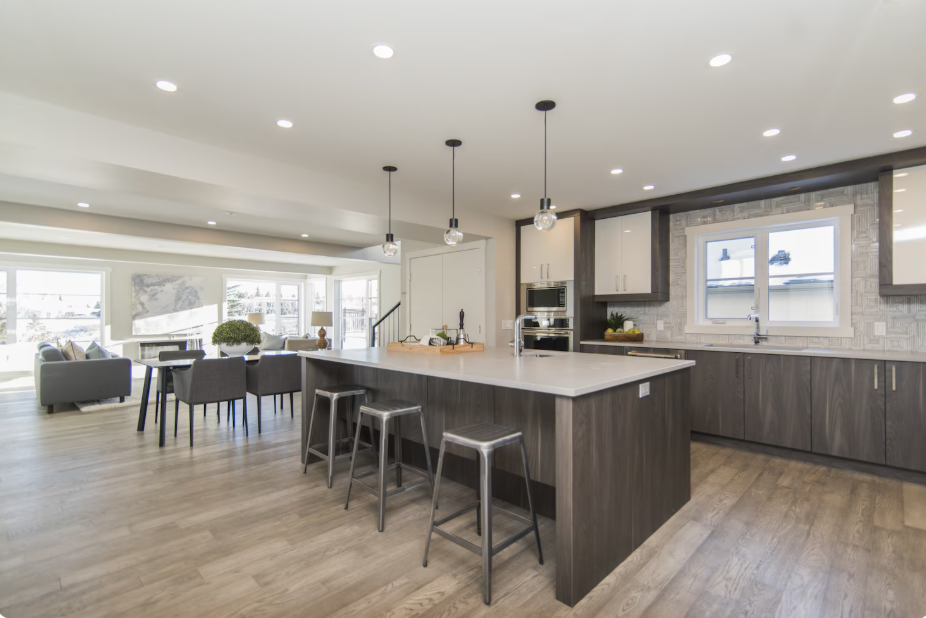
You don’t have to overhaul the whole kitchen to get there, either. Keep the overhead light. It’s fine. Then add something closer to the action. A pendant over an island, a directional light over your main prep spot. Even shifting where a fixture sits can make a difference. Kitchen lighting is less about turning everything up and more about aiming it better.
Bulb choice plays into it too, but it doesn’t need to get technical. Super warm light can make everything look a bit muddy. Very cool light can feel harsh. Somewhere in the middle tends to feel clean and easy to work with. You’ll know when it feels right.
And then there’s this other thing that happens. The kitchen just feels better to be in. Less strain, less squinting, less of that low-level frustration you didn’t realize was there. You move through things a bit more smoothly. It feels calmer.
Not styled. Just sorted. Before you buy new tools or try to cook something ambitious, fix the light.
You’ll see more of what you’re doing.
You’ll second guess less.
And yeah, the food usually turns out better.
