

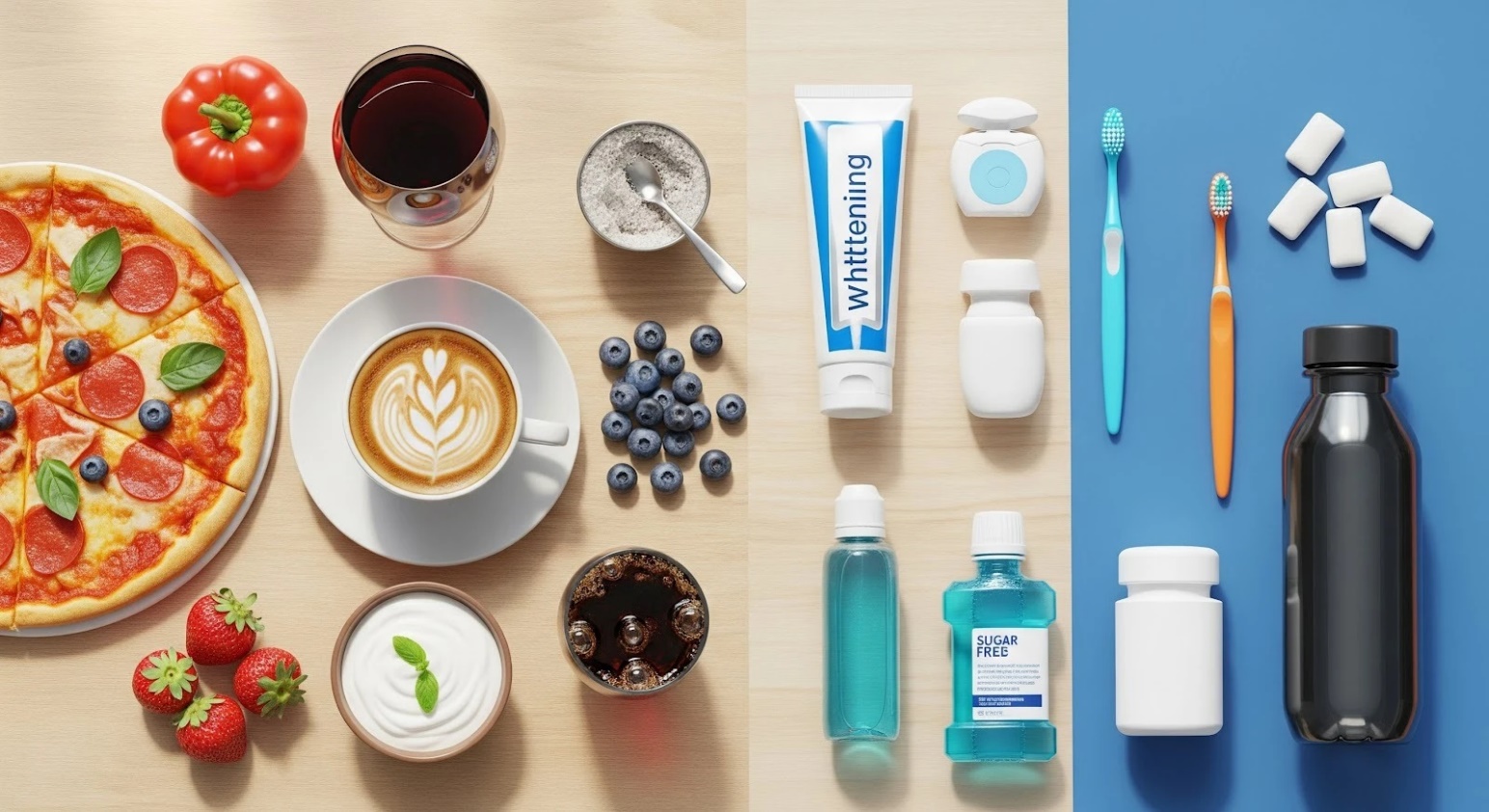
We have all been there. You have just eaten a wonderful glass of deep-red Cabernet or a bowl of spicy curry and you see yourself in the bathroom mirror. The horror sets in—your smile is a little less of a pearl and a little more of a sunset. It is the usual trade-off though; when it comes to staining our teeth, the most tasty, colorful foods and beverages are the biggest perpetrators.
But only wishing to have a bright smile does not mean that you are condemned to a life of cauliflower, rice, and water. Absolutely not. There is not enough time in life to have boring food. The good news is that you do not need to decide between gourmet and dental beauty. It is possible to have your cake (or curry) and eat it with a couple of tricks and a little bit of information about how the staining process works.
Foods That Stain Teeth: Understanding Chromogens and Acids
To overcome the stain, you must know the stain. Food does not color your teeth equally. Darkly pigmented foods are the key culprits of color and they normally include strong color pigments referred to as chromogens. These are the pigments that have a tendency of attaching themselves to the enamel, the hard shell of your teeth.
The easy suspects are the usual suspects that include coffee, tea, red wine, and dark berries. But there is a second, more insidious fellow, acid. Foods and drinks that have acidic content weaken the enamel, making it coarse and porous. This erosion forms the ideal surface for pigment attachment. That explains why it happens that even though white wine is not colored, it actually leaves you with teeth that are even more vulnerable to being stained by other foods that you may consume later.
Thus, a high pigment plus high acidity, as in tomato sauce, balsamic vinegar or sports beverages, is a disaster in discoloration.
The “Sip and Swish” Technique to Prevent Staining
You do not have to forego your morning latte and your evening glass of Merlot. You simply need to alter your consumption habits. Sip and Swish is one of the most effective habits that is quite easy.
In the case that what you drink is dark or acidic, then drink water with it. Once you take a couple of sips of coffee or wine, then you should take a swallow of water and swish it in your mouth and then swallow it. This mere move rinses off the chromogens before they can get a foothold in the microscopic ridges of your enamel. It also assists in counteracting the acid in your mouth so your teeth are not eroded.
Straws should be used to serve cold drinks such as iced tea or soda. At dinner, it may seem childish, but by not going through the front teeth at all, it is a game changer when it comes to avoiding the stains.
Protecting Enamel with the Cheese Barrier
The following is a tip, which is too good to be true and is supported by science: eat more cheese. In particular, such hard cheeses as cheddar or gouda.
When you eat a piece of the cheese in front or with a glass of wine, it forms a protective coating of calcium and fat on your teeth. This is the barrier that makes it more difficult for pigments to adhere. Moreover, cheese is known to neutralize the pH in your mouth, thereby overcoming the acid that makes the enamel soft.
Vegetables can also act as natural cleaners. High-fiber foods such as carrots, celery and apples are crunchy, therefore serve as a natural abrasive. Chewing them produces saliva, the natural system of protection of your mouth and the physical process of scrubbing the surfaces of your teeth. When you are placing an order of appetizers, the crudite platter will be your friend.
Managing Staining Spices in Global Cuisines
In case you are a food lover, chances are that you like traveling to other global cuisines. We have spices such as turmeric, saffron, and paprika, which are amazing to taste and will take their toll on a white smile. Turmeric, in this case, has a bad reputation of making all things yellow—your Tupperware, your teeth, etc.
Suppose you want to have dinner out. You may be in need of the daring, spicy profiles in your local Thai restaurant located in the street. Thai food tends to contain turmeric and dark soy sauces which are also strong stains. Rather than foregoing the curry, make an order of a side of steamed vegetables or crunchy spring rolls. Alternate bites of the rich, pigmented curry with the fibrous veggies to clean your teeth in the process of consuming food.
Also, you can use sauces that are cream based as opposed to tomato or oil based in case of staining but you should take moderation into consideration in general health. Sometimes the pigments cannot stick as aggressively because the fat in the cream prevents this in the dishes that are made of tomatoes and acids.
The Best Time to Brush Your Teeth After Eating
One of the biggest errors that individuals commit is to hurry up and brush their teeth after having a meal. The intent is good, but the timing is wrong.
As discussed above, acidic substances weaken your teeth. When you brush your teeth immediately after you have eaten an orange or drank a soda, you are in effect washing that acid further into the tooth and eroding the softened enamel. This brushing renders your teeth more porous and liable to be stained in the long-term.
The golden rule is to wait at least 30-60 min after consuming food and then take a brush in your hand. This allows your saliva ample time to remineralize the enamel to give back the natural pH level of your mouth. Meanwhile, continue with the swish technique using water.
Teeth Whitening Tips and Professional Cleaning
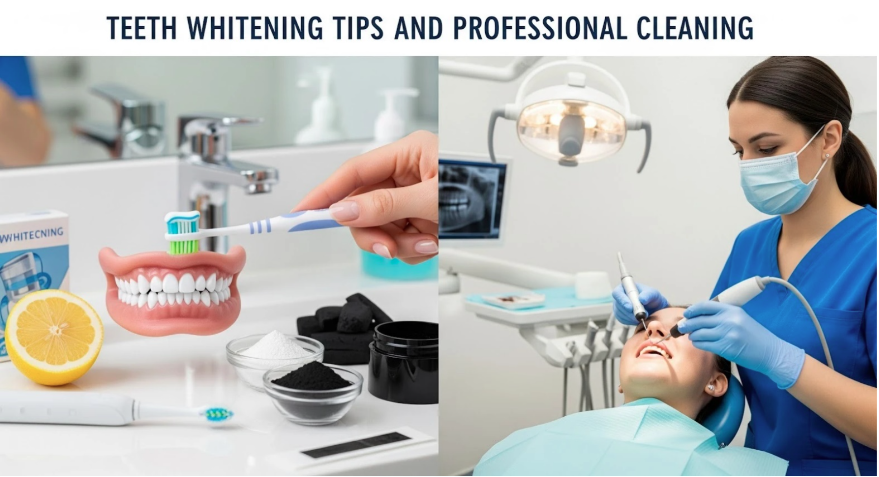
Life occurs at times in spite of our best intentions. Several years of coffee and dinner traveling will cloud a smile of course. Here, a good routine at home care comes in to fill the gap.
Electric toothbrushing may work better than manual brushing at getting the surface stains off before they get permanent, and toothpastes can help, although most of them use abrasive particles to polish the teeth, and this may cause some form of sensitivity with daily use.
In case you want a larger reset, professional cleaning cannot be compromised. A dental hygienist is able to clean tartar and surface stains which cannot be swept away by any amount of brushing. Professional whitening treatments are the least dangerous bet to those who wish to turn back the clock a little more. They provide a safer method of getting your teeth whiter without having to damage your gums or enamel, as it may occur with unregulated over-the-counter kits.
Balancing a Foodie Lifestyle with a Bright Smile
Finally, teeth are instruments of life and not just a way of showing off. An ultra-whiteness of smile that has neither tried a blackberry, a fine espresso, nor a vindaloo spicy dish has a smile which has been denied the best things in life.
Living in pigment fear is not the objective but being able to cope with it. You can afford to explore the world of great tastes and stay on top of your dental hygiene by being hydrated, having crunchy sides, waiting to brush, and keeping up with your dentist. Order the red wine now. At least do not forget to take a glass of water to accompany it.
