

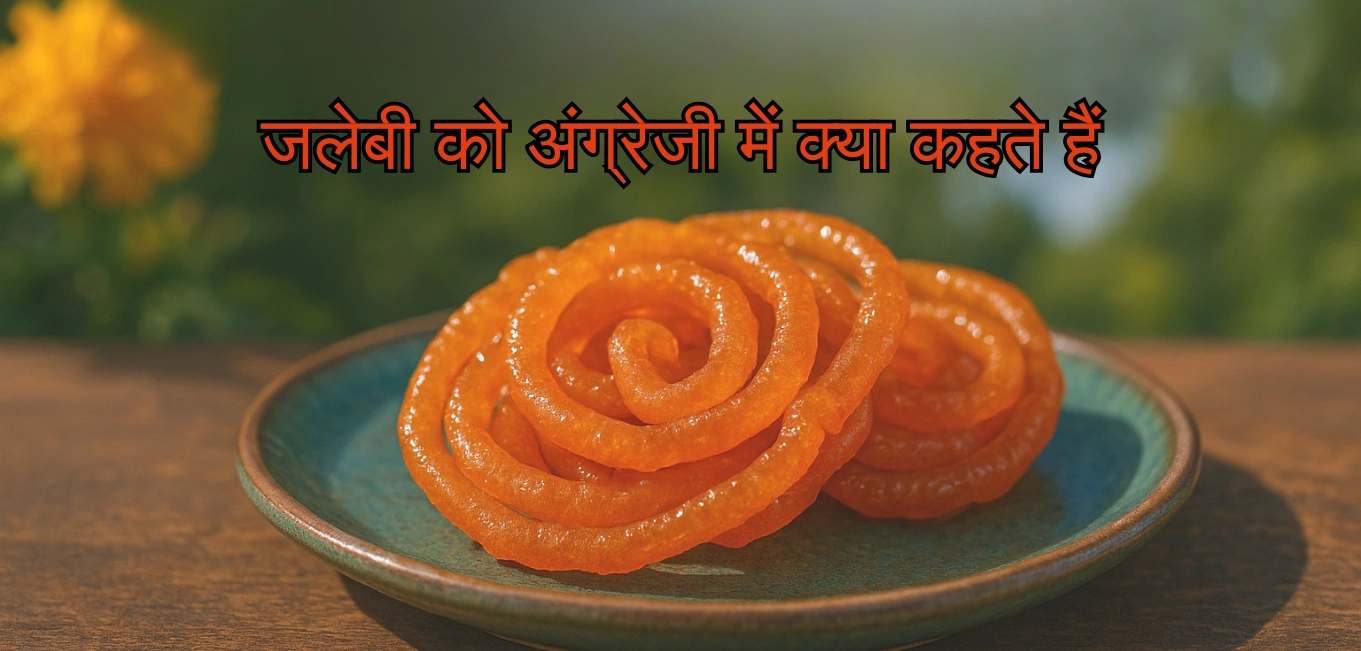
What is Jalebi Called in English? Your Complete Guide to India’s Spiral Sweet
Picture this: You’re at an Indian restaurant with your foreign friends, and they’re absolutely mesmerized by those golden, spiral-shaped sweets dripping with syrup. They ask you, “What’s that called?” and suddenly you’re stumped. Jalebi ko english mein kya kahate hain? It’s a question that has puzzled many of us, and today we’re going to unravel this sweet mystery once and for all!
Let’s be honest – we’ve all been there. You want to explain this incredible Indian dessert to someone who doesn’t speak Hindi, but you realize that some culinary treasures don’t have direct translations. Don’t worry, though – by the end of this article, you’ll be the jalebi expert your friends never knew they needed!
Jalebi at a Glance
| Aspect | Details |
|---|---|
| English Name | Jalebi (retained as is) or “Spiral Sweet” |
| Origin | Disputed: India, Persia, or Arab regions |
| Main Ingredients | All-purpose flour, yogurt, sugar, saffron |
| Preparation Time | 4-6 hours (including fermentation) |
| Cooking Time | 15-20 minutes |
| Calories per piece | Approximately 150-200 calories |
| Popular Variants | Paneer jalebi, Afghan jalebi, Jungle jalebi |
| Best Served | Hot and fresh |
Where Was Jalebi Invented?
Many people wonder, jalebi kaha invent hui thi or where was jalebi invented. Jalebi was first invented in the Middle East, where it was called Zalabiya or Zolabiya. Later, it traveled to India and became a favorite sweet dish, deeply connected with Indian festivals and traditions.
Fun fact: There’s also something called jungle jalebi, a fruit that looks similar to jalebi in shape but has a completely different taste and texture! 🍊
Where Was Jalebi Invented?
Many people wonder, jalebi kaha invent hui thi or where was jalebi invented. Jalebi was first invented in the Middle East, where it was called Zalabiya or Zolabiya. Later, it traveled to India and became a favorite sweet dish, deeply connected with Indian festivals and traditions.
Fun fact: There’s also something called jungle jalebi, a fruit that looks similar to jalebi in shape but has a completely different taste and texture! 🍊
Method
-
Prepare the batter using flour, yogurt, and a pinch of baking soda.
-
Let the batter ferment overnight for a deeper flavor. 🍯
-
Fry the jalebis in hot ghee or oil until crispy and golden.
-
Soak the fried jalebis in sugar syrup for a juicy and delicious taste.
-
Serve warm and enjoy with fafda jalebi or share with loved ones during festive times.🎊
The Simple Answer: What Do We Call Jalebi in English?
Here’s the straightforward answer that might surprise you: Jalebi ko english mein kya kahate hain – we simply call it “Jalebi”! Yes, you read that right. Just like “pizza,” “sushi,” or “croissant,” jalebi has earned its place in the English language as a borrowed word.
However, if you want to be descriptive, you could call it:
- Spiral Sweet
- Funnel Cake (though this isn’t entirely accurate)
- Syrup-soaked Pretzel (again, not perfect but helps paint a picture)
- Deep-fried Spiral Dessert
But honestly? Most English dictionaries, including Oxford and Merriam-Webster, have officially included “jalebi” as an English word. So when someone asks you jalebi ko english mein kya bolate hain, you can confidently say “Jalebi” – it’s that simple!
The Cultural Journey: How Jalebi Traveled Across Languages
The Etymology Adventure
The word “jalebi” has quite the linguistic journey. Some food historians suggest it comes from the Arabic word “zalabiya” or the Persian “zolbiya.” Others argue it’s derived from the Sanskrit “kundalika,” meaning “circular.” This linguistic diversity perfectly reflects jalebi’s multicultural heritage.
Expert Insight: According to Dr. Pushpesh Pant, renowned food historian and author, “Jalebi represents the beautiful confluence of cultures that characterizes Indian cuisine. Its name, like its recipe, has evolved through centuries of cultural exchange.”
Regional Variations and Names
Interestingly, jalebi ko english meaning varies slightly across regions:
North India: Simply “Jalebi” South India: Sometimes called “Jangri” (though technically different) Middle East: “Zalabiya” or “Mushabak” Iran: “Zolbiya” Turkey: “Tulumba” (similar concept)
The Great Origin Debate: Where Was Jalebi Invented?
Now, here’s where things get spicy (pun intended)! The question “jalebi kaha invent hui thi?” or “where was jalebi invented?” has food historians engaged in heated debates for decades.
Theory 1: The Indian Origin Story
Many Indian food experts argue that jalebi originated in India, pointing to ancient Sanskrit texts that mention similar sweet preparations. The Priyamkarnrpakatha, a 10th-century text, describes a sweet called “kundalika” that bears striking resemblance to our beloved jalebi.
Theory 2: The Persian Connection
Persian food historians claim that jalebi traveled from Iran to India through the Mughal invasions. They point to the Persian sweet “zolbiya” as the original ancestor of jalebi.
Theory 3: The Arab Influence
Some scholars trace jalebi’s roots to the Arab world, where “zalabiya” was a popular dessert. This theory suggests that Arab traders introduced the sweet to both Persia and India.
The Verdict: While we may never know the exact origin, what’s certain is that jalebi has become quintessentially Indian, evolving and adapting to local tastes over centuries.
Nutritional Aspect: The Sweet Truth
Let’s address the elephant in the room – yes, jalebi is indulgent. A single piece contains approximately 150-200 calories, primarily from sugar and refined flour. However, when enjoyed in moderation as part of festivals or special occasions, it’s a delightful treat that brings joy and cultural connection.
Health Tip: If you’re health-conscious, try making jalebi with:
- Whole wheat flour instead of refined flour
- Jaggery instead of white sugar
- Smaller portions served with fresh fruits
Disclaimer: This article is for informational and educational purposes only. While we strive for accuracy, traditional recipes and historical claims may vary across sources. Nutritional information is approximate and may vary based on preparation methods and portion sizes. Individuals with dietary restrictions or health conditions should consult with healthcare providers before consuming traditional sweets. The historical claims about jalebi’s origin are based on available research but remain subject to scholarly debate.
Traditional Jalebi Recipe – घर का बना परफेक्ट जलेबी
Perfect crispy, juicy jalebis that taste just like your favorite sweet shop!
📊 Recipe Overview
| Detail | Information |
|---|---|
| Prep Time | 12 hours (for fermentation) |
| Cook Time | 30 minutes |
| Total Time | 12.5 hours |
| Servings | 15-20 pieces |
| Difficulty | Intermediate |
| Cuisine | Indian |
🥄 Ingredients
For Jalebi Batter:
- 1 cup All-purpose flour (Maida)
- 2 tbsp Gram flour (Besan)
- 2 tbsp Plain yogurt (Dahi)
- 1/4 tsp Turmeric powder (Haldi)
- Pinch of Baking soda
- 3/4 cup Lukewarm water (adjust as needed)
- Oil for deep frying
For Sugar Syrup:
- 1.5 cups Sugar
- 1 cup Water
- 4-5 Green cardamom pods
- 1 tsp Rose water (optional)
- Few strands Saffron (optional)
- 1 tsp Lemon juice
- 1 tsp Ghee
👩🍳 Step-by-Step Instructions
Stage 1: Preparing the Batter (Night Before)
- Mix Dry Ingredients
- In a large bowl, combine maida, besan, and turmeric powder
- Whisk well to avoid any lumps
- Add Wet Ingredients
- Add yogurt to the flour mixture
- Gradually add lukewarm water while mixing
- Mix until you get a smooth, lump-free batter
- Consistency should be like thick cream (not too thick, not too thin)
- Fermentation Process
- Cover the bowl with a damp cloth
- Let it ferment for 8-12 hours at room temperature
- In winter, place in a warm place
- The batter will develop a slight tangy smell and bubbles
Stage 2: Making Sugar Syrup
- Prepare the Syrup
- In a heavy-bottomed pan, combine sugar and water
- Add cardamom pods and bring to boil
- Add lemon juice to prevent crystallization
- Cook until you reach 1-string consistency (when you touch the syrup between your fingers, it forms one string)
- Final Touches
- Add ghee, saffron, and rose water
- Keep the syrup warm on low heat
- Important: Syrup should be warm when jalebis are added
Stage 3: Making Perfect Jalebis
- Check Batter Consistency
- After fermentation, the batter should be slightly thick but flowing
- Add a pinch of baking soda and mix gently
- If too thick, add 1-2 tbsp water
- If too thin, add 1 tbsp maida
- Set Up Frying Station
- Heat oil in a wide, heavy-bottomed pan to 350°F (175°C)
- Use a squeeze bottle or piping bag for batter
- Alternatively, use a cloth with a small hole cut in the corner
- Frying Process
- Test the oil: Drop a small amount of batter – it should sizzle and come up immediately
- Hold the squeeze bottle 2-3 inches above oil
- Start from center and make concentric circles (2-3 rounds)
- Make 2-3 jalebis at a time
- Fry on medium heat for 1-2 minutes until light golden
- Flip gently and fry other side for 1 minute
- Soaking in Syrup
- Immediately transfer hot jalebis to warm syrup
- Let them soak for 30-60 seconds (not more!)
- Remove and place on serving plate
- Serve immediately while warm
🎯 Pro Tips for Perfect Jalebis
Batter Secrets:
- Fermentation is key: Don’t skip the overnight fermentation
- Right consistency: Batter should flow smoothly but not be watery
- Temperature matters: Use lukewarm water, not hot or cold
Frying Mastery:
- Oil temperature: Too hot = burns outside, raw inside; Too cool = absorbs oil
- Shape technique: Practice the spiral motion before starting
- Don’t overcrowd: Fry 2-3 pieces maximum at a time
Syrup Perfection:
- 1-string consistency: This is crucial for proper absorption
- Keep warm: Cold syrup won’t penetrate properly
- Timing: Soak immediately after frying
⚠️ Common Mistakes to Avoid
- Skipping fermentation – Results in dense, heavy jalebis
- Wrong oil temperature – Either burns or becomes oily
- Over-soaking – Makes jalebis too sweet and soggy
- Thick syrup – Won’t absorb properly
- Cold syrup – Poor absorption and texture
🔍 Troubleshooting Guide
Problem: Jalebis breaking while frying
- Solution: Batter too thin, add more maida
Problem: Not getting crispy texture
- Solution: Oil temperature too low or batter not fermented properly
Problem: Too oily jalebis
- Solution: Oil temperature too low or soaking too long in syrup
Problem: Not absorbing syrup
- Solution: Syrup too thick or too cold
🌟 Variations & Tips
Healthier Options:
- Use jaggery instead of sugar for syrup
- Add a tablespoon of semolina for extra crispiness
- Use 50% whole wheat flour for added nutrition
Flavor Variations:
- Kesar Jalebi: Add extra saffron to both batter and syrup
- Chocolate Jalebi: Add cocoa powder to batter
- Kesari Jalebi: Add orange food color for vibrant appearance
Storage Tips:
- Best consumed fresh and warm
- Store in refrigerator for up to 2 days
- Reheat in oven for 2-3 minutes before serving
- Don’t store in airtight containers (becomes soggy)
📝 Nutritional Information (Per Piece)
- Calories: 45-50
- Carbs: 8-10g
- Fat: 2-3g
- Sugar: 6-7g
- Protein: 1g
🎉 Serving Suggestions
- Traditional: Serve with hot masala chai or cardamom tea
- Festive: Garnish with chopped pistachios and silver leaf (varak)
- Modern: Serve with vanilla ice cream for temperature contrast
- Regional: Pair with fafda (Gujarati style) or rabri
🏆 Expert Chef Tips
Chef’s Secret: “The key to restaurant-style jalebis is maintaining the right fermentation temperature. In winter, place the batter bowl in a slightly warm oven (turned off) overnight.” – Master Chef Raman Gupta
Pro Tip: “Never compromise on the 1-string syrup consistency. This single factor determines whether your jalebi will be perfect or disappointing.” – Sweet Shop Owner, Chandni Chowk
⏰ Make-Ahead Tips
- Batter: Can be made 2 days ahead and stored in refrigerator
- Syrup: Can be made a day ahead and reheated
- Freezing: Fried jalebis can be frozen for up to 1 month (reheat before serving)
Conclusion
So, the next time someone asks you “jalebi ko english mein kya kahate hain“, you can confidently tell them that jalebi is simply called “jalebi” in English – it’s earned its place as a global word! But more than just a name, jalebi represents the beautiful complexity of Indian culture, the artistry of traditional cooking, and the joy of shared celebrations.
Whether you call it jalebi, spiral sweet, or India’s golden treasure, this dessert continues to bring smiles, create memories, and bridge cultures. From its mysterious origins to its modern avatars, from street-side stalls to international restaurants, jalebi has truly spiraled its way into hearts worldwide.
The beauty of jalebi lies not just in its taste but in its ability to connect us to our roots while adapting to contemporary palates. As we’ve explored, jalebi ko english mein kya bolate hain is less important than understanding its cultural significance and the joy it brings to millions of people.
Next time you bite into that crispy, syrupy spiral of happiness, remember that you’re not just enjoying a dessert – you’re participating in a tradition that spans centuries and cultures. And that, dear readers, is the true sweetness of jalebi.
Frequently Asked Questions
Q1: What is the exact English translation of jalebi?
A: Jalebi doesn’t have a direct English translation. It’s officially recognized as “jalebi” in English dictionaries. Descriptively, it can be called a “spiral sweet” or “syrup-soaked spiral dessert.”
Q2: Is jalebi the same as funnel cake?
A: No, while both are spiral-shaped and fried, jalebi uses fermented batter and is soaked in sugar syrup, while funnel cake uses regular batter and is typically dusted with powdered sugar.
Q3: Where was jalebi originally invented?
A: The origin is debated among food historians, with claims from India, Persia, and Arab regions. Most likely, similar preparations evolved simultaneously across these cultures.
Q4: How many calories are in one jalebi?
A: A medium-sized jalebi contains approximately 150-200 calories, primarily from sugar and refined flour.
Q5: What is jungle jalebi?
A: Jungle jalebi (Pithecellobium dulce) is actually a fruit, not a dessert. It gets its name because its twisted pods resemble jalebi spirals.
Q6: Can jalebi be made healthier?
A: Yes, you can use whole wheat flour, jaggery instead of sugar, and consume smaller portions. Some variants use alternative flours and natural sweeteners.
Looking for more delicious menu options? Check out our previous feature on Solaria Menu Prices 2025 – another amazing culinary destination by Flavorful Menu!
Looking for design inspiration? Check out our simple and stunning post on Ghazal Alagh Net Worth
