

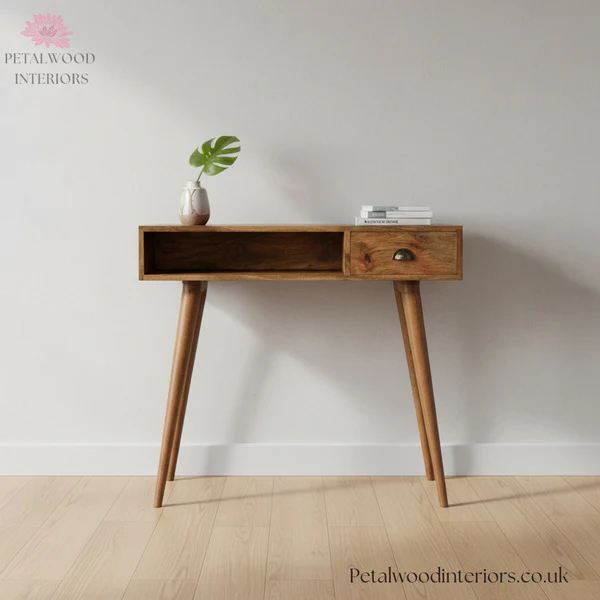
A writing desk is often misunderstood as simply a smaller desk, but the distinction is far more intentional. It is designed around how you work, how you sit, and how much space you actually need, rather than how much furniture you can fit into a room.
The difference becomes especially important in modern homes where space, aesthetics, and function need to work together. If you are planning your setup, exploring the full range at Petalwood Interiors helps contextualise how writing desks are designed for real living spaces rather than traditional office layouts. For broader context, classifications of desk furniture types and the evolution of writing furniture in domestic interiors also explain why these proportions still exist today.
What design features define a writing desk
A writing desk is defined by compact dimensions, minimal storage, and a clean working surface that prioritises handwriting, light tasks, and visual simplicity over heavy-duty workspace functionality.
The most important feature is restraint. Writing desks are typically shallower and lighter than standard desks, allowing them to sit comfortably in smaller rooms without dominating the layout. The absence of deep storage is intentional, preventing clutter and reinforcing focused use.
Another key detail is leg structure. Writing desks usually stand on four legs rather than solid pedestals, which creates a sense of openness and allows more light and space to flow visually through the room.
How does a writing desk differ from a standard desk
A writing desk differs from a standard desk by offering a smaller footprint, reduced storage, and a focus on simple tasks rather than supporting full office setups with monitors, files, and equipment.
The most practical difference is depth. Standard desks are designed to hold screens, keyboards, and accessories, while writing desks are built for proximity. Everything you need sits within comfortable arm’s reach.
This changes how the desk feels to use. Writing desks encourage shorter, more focused sessions, while standard desks are designed for extended, multi-task workflows.
What distinguishes a writing desk from an executive desk
A writing desk is lighter, more refined, and less imposing than an executive desk, which is designed to create presence, authority, and large-scale functionality within a room.
Executive desks are typically wider, heavier, and visually dominant. They are built to anchor a space and often include multiple drawers and storage systems.
Writing desks do the opposite. They integrate into a room rather than defining it. This makes them more suitable for homes where the desk should support the space rather than become the focal point.
Why does size and depth matter so much
Size and depth determine how a desk interacts with the room, affecting movement, comfort, and whether the space feels open or restricted.
A shallower desk allows better circulation, particularly in smaller rooms or shared spaces. This is one of the most overlooked benefits of writing desks. They maintain usability without compressing the room.
Depth also affects posture. When the surface is closer, it reduces overreaching and encourages a more natural seated position, which can improve comfort during writing or light work.
How does storage design change how the desk is used
Storage design influences behaviour by either encouraging organisation and focus or enabling accumulation and clutter depending on how much space is provided.
Writing desks deliberately limit storage to one or two shallow drawers. This forces a more selective approach to what you keep within reach.
In contrast, larger desks often lead to unused or overfilled storage, which can reduce efficiency. The writing desk’s simplicity is not a limitation, it is a design decision that supports clarity and ease of use.
What should you look for when choosing a writing desk
Choosing a writing desk requires evaluating space, proportions, materials, and how you actually intend to use the desk on a daily basis.
A practical way to approach it is:
- Measure the available width and depth to ensure the desk fits without restricting movement.
- Check clearance behind the chair so the space remains usable when seated.
- Choose a depth that keeps your work within easy reach rather than stretching forward.
- Assess whether minimal storage is sufficient for your needs or if additional storage is required elsewhere.
- Match materials and finish to the rest of the room to maintain visual cohesion.
This process works because writing desks are less about capacity and more about proportion and placement.
Why do writing desks work so well in modern homes
Writing desks suit modern homes because they provide function without visual heaviness, allowing rooms to remain flexible, comfortable, and aesthetically balanced.
As more spaces become multi-functional, the need for lighter furniture increases. Writing desks allow a room to serve as both a workspace and a living area without feeling like a dedicated office.
This is particularly valuable in smaller homes, flats, and open-plan layouts where every piece of furniture affects how the space is perceived.
Conclusion
What makes a desk a writing desk comes down to intentional simplicity. It is designed to do less, but to do it better.
By focusing on proportion, usability, and visual lightness, writing desks offer a solution that fits modern living more naturally than traditional office furniture. They are not a compromise, but a different approach to how furniture supports daily life.
