

A whipped cream charger tank is both a food-contact gas supply and a pressurised package. For a café, bakery or distributor, reliable performance depends on more than the number printed on the cylinder. Gas purity, net fill, valve compatibility, cylinder condition, traceability, transport compliance and staff handling all influence whether the product delivers consistent cream safely.
Lovely Mate lists food-grade nitrous oxide chargers in 8.5 g, 615 g, 2100 g and 3000 g formats and positions them for cafés, bakeries and wholesale buyers. The company states 99.99% N2O purity and no oil residue. Buyers evaluating Lovely Mate cream chargers should treat those claims as the start of supplier qualification, then request the current batch and packaging evidence needed for their own market.
Choose capacity by workflow, not by the largest cylinder
Small 8.5 g cartridges suit low-volume service, home-style dispensers and situations where each portion should remain sealed until use. They are familiar and easy to count, but create more individual packaging and cartridge changes. Larger tanks reduce changeovers and can support a busy kitchen through a compatible regulator and filling arrangement, but they require more deliberate storage, training and inventory control.
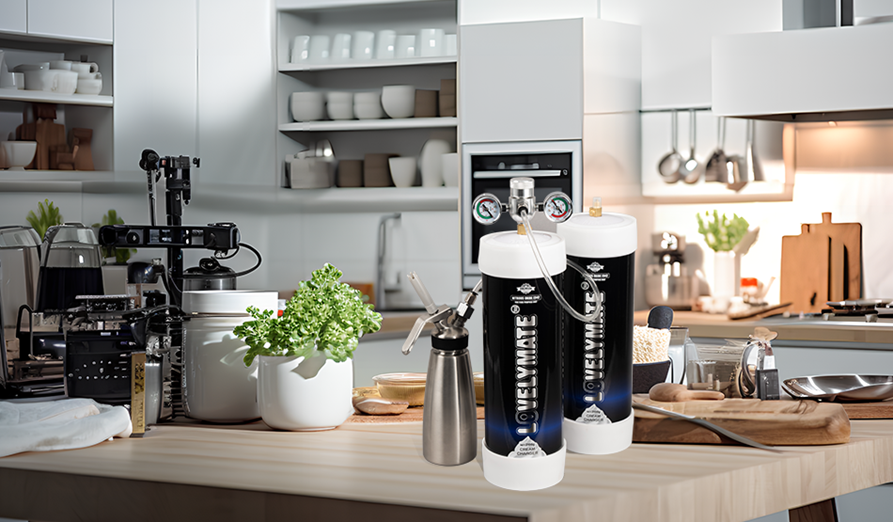
A large cream charger tank can reduce changeovers, but only when the regulator, hose and operating procedure match the cylinder.
Estimate actual consumption from recipes and service volume. Record how many dispenser fills are made during an average and peak day, the charger size currently used and the amount lost during connection or changeover. A high-capacity tank may be economical for a central pastry kitchen but inconvenient for a small counter with limited ventilated storage.
Food-grade gas needs batch documents
Nitrous oxide used in food preparation should meet the applicable food-grade specification for the destination. A website purity percentage is useful, but a professional buyer should request a certificate of analysis tied to the batch. The document should identify the product, batch or lot, test date, result, method or specification and responsible entity.
Purity alone does not describe every possible impurity. Depending on the regulatory and customer requirements, the test scope may include moisture, oxygen, nitrogen, carbon dioxide, carbon monoxide, nitric oxides, oil or other residues. The buyer’s food-safety team should define which limits and methods apply instead of assuming that one generic “99.99%” result covers all markets.
Sensory consistency is a useful receiving check
Food-grade N2O should not introduce an oily or chemical off-note into cream. Kitchens can keep a simple incoming test using the same neutral cream, dispenser, temperature and procedure. Record taste, odour, texture, yield and dispensing behaviour. This is not a replacement for laboratory analysis, but it can reveal a damaged valve, contaminated connector or unusual batch before service.
Flavoured cylinders require a separate recipe and allergen review. A flavour that works in one dessert may interfere with another, and the ingredient or flavouring status must comply with local labelling rules. Keep original and flavoured stock clearly separated.
Valve and regulator compatibility must be confirmed in writing
Large tanks are not connected directly to a cream dispenser without the correct pressure-control and transfer components. Thread, valve design, pressure rating, regulator range, hose material and dispenser connection must match. An apparently similar fitting can damage the valve, leak or expose the operator to uncontrolled discharge.
Ask the supplier for a connection drawing and the exact compatible regulator or filling kit. Confirm whether adapters are permitted and which seals are used. Components in contact with the culinary gas should be suitable for the application and kept clean, dry and free of oil or grease.
Before each connection, inspect threads, gasket and hose. Never force a connector that does not engage smoothly. Leak-check with an approved method after assembly; do not use a flame. A recurring leak is a reason to isolate the equipment and replace the damaged component, not tighten it with improvised tools.
Net fill and usable yield are different measurements
The cylinder label should state net N2O content separately from gross package weight. Receiving staff can compare sealed cylinder weight against the supplier’s declared tolerance, using a calibrated scale where required. Large variation may indicate filling or leakage problems.
Usable yield also depends on residual pressure, regulator setting, transfer losses, recipe temperature and operator technique. To compare suppliers, run a controlled kitchen trial and measure the number of acceptable dispenser charges or finished portions per cylinder. Cost per usable portion is more meaningful than cylinder price alone.
A heavier tank does not automatically deliver more value if the valve leaves excessive residual gas or the process wastes gas at every disconnection. Document the end-of-use condition and follow the supplier’s disposal or recycling instructions.
Cylinder manufacturing and inspection records matter
A cream charger tank is a pressure vessel. Request the applicable cylinder standard, manufacturing identification, pressure test information, valve specification and conformity documents for the destination. Requirements differ between countries, transport modes and cylinder types, so a marking accepted in one market may not be enough in another.
Inspect each delivery for dents, deep corrosion, heat damage, damaged valves, missing caps and illegible labels. Quarantine questionable cylinders. Do not accept a box simply because the outer carton is intact; heavy tanks can strike one another if internal dividers fail.
Packaging has to survive the entire distribution route
The article title correctly puts packaging beside batch control. Wholesale cylinders may pass through factory handling, container loading, ports, domestic couriers, warehouses and a commercial kitchen. The package needs to prevent valve impact, movement and moisture exposure through that route.
Ask for inner dividers, valve protection, carton strength, pallet pattern and stretch-wrap details. Verify gross carton and pallet weight against warehouse and courier limits. Labels should remain visible without opening the carton and include product name, quantity, net content, lot, manufacturer or responsible seller, handling warnings and any transport marks required by law.
For sea or air shipment, obtain the correct dangerous-goods classification, safety data sheet and carrier acceptance before dispatch. Nitrous oxide cylinders cannot be treated as ordinary food parcels merely because the end use is culinary. Importers should confirm local permits, age restrictions, sale controls and storage limits.
Traceability connects a complaint to a real batch
Every cylinder or smallest sale unit should carry a legible batch or lot reference. The outer carton and shipping documents should use the same code. A distributor needs to know which customers received each lot so that a complaint or recall can be contained without stopping all stock.
Lovely Mate states that it uses a quality-assurance system and offers support. A wholesale customer should ask how production lots are defined, which records are retained, how long samples and test data remain available, and what information is needed when reporting a problem. Photographs of the cylinder, label, valve, carton and batch code should be part of the complaint process.
Storage is a pressure-safety issue
Store cylinders upright where required by their design, secured against falling, in a cool, dry and ventilated area away from heat, ignition sources and direct sun. Keep them away from incompatible materials and protect valves from impact. Follow the label, safety data sheet and local fire code for quantity limits and separation.
Do not store large tanks in sealed cabinets, vehicle interiors or near ovens and dishwashers. Kitchen space is often warm and congested; convenience does not justify exposing a pressurised cylinder to heat. Separate full, in-use, empty and quarantined stock and rotate by batch.
Kitchen use needs a written procedure
- Verify that the user is an authorised adult trained in culinary N2O equipment.
- Inspect the cylinder, valve, regulator, hose and dispenser before connection.
- Make connections in a ventilated area with the cylinder stable and secured.
- Open the valve gradually and use only the pressure recommended for the dispenser and recipe.
- Keep face and hands away from discharge points; rapidly expanding gas can cause cold injury.
- Close and depressurise the system according to the equipment instructions before disconnection.
- Record the batch and date where the operation is part of a commercial food-safety plan.
Nitrous oxide sold as a cream charger is intended for culinary use. It must not be inhaled or used recreationally. Misuse can cause severe injury or death. Suppliers and resellers should use age controls, clear warnings and responsible sales procedures, and comply with local restrictions.
Recipe consistency also depends on the dispenser
Cold cream, correct fat content, dissolved sugar and clean equipment all affect whipping. A charger cannot correct a warm mixture, blocked nozzle or damaged dispenser seal. When output varies, check the recipe and equipment before blaming the gas.
Standardise fill volume, headspace, chilling time, shaking and dispensing angle. Clean and dry the dispenser according to its manufacturer’s instructions. Keep spare gaskets and inspect threads. A controlled procedure makes it possible to compare charger batches fairly.
What to request from a wholesale supplier
Before ordering from a cream charger shop, request a quotation that identifies cylinder size, N2O net weight, flavour, valve and thread, included accessories, units per carton, cartons per pallet, gross weight, lead time and destination terms. Add the batch certificate, safety data sheet, pressure-vessel evidence, dangerous-goods documents and label artwork to the document list.
For private-label or recurring wholesale supply, approve a golden sample and packaging specification. Define acceptable net-fill tolerance, appearance, valve leakage, carton damage and label position. Require notice before changes to cylinder source, valve, gas specification, flavour or packaging.
Run a pilot shipment before committing to volume
A small commercial batch can test customs documentation, carton durability, warehouse handling, connection compatibility and actual kitchen yield. Use it under peak service conditions and gather feedback from operators. Record any leak, damaged carton, inconsistent fill or sensory concern by lot.
Scale only after the documents, equipment and process work together. A low wholesale price is not a saving if cylinders are delayed as dangerous goods, adapters do not fit, cartons fail or kitchen staff waste gas.
The core judgement is repeatability
Stable packaging protects the pressurised product; batch control protects the food result and the supply chain. Lovely Mate’s range of 8.5 g through 3000 g chargers gives buyers capacity options, but the right format is the one that matches service volume, storage and trained handling.
A dependable supplier should be able to connect every carton to a batch result, explain the valve and regulator, provide transport documents and respond to a field issue with traceable evidence. That is what turns a cylinder of N2O into a controlled culinary ingredient rather than an anonymous pressure package.
